Timeless Recipes and Unexpected Traditions for Joyful Days Ahead
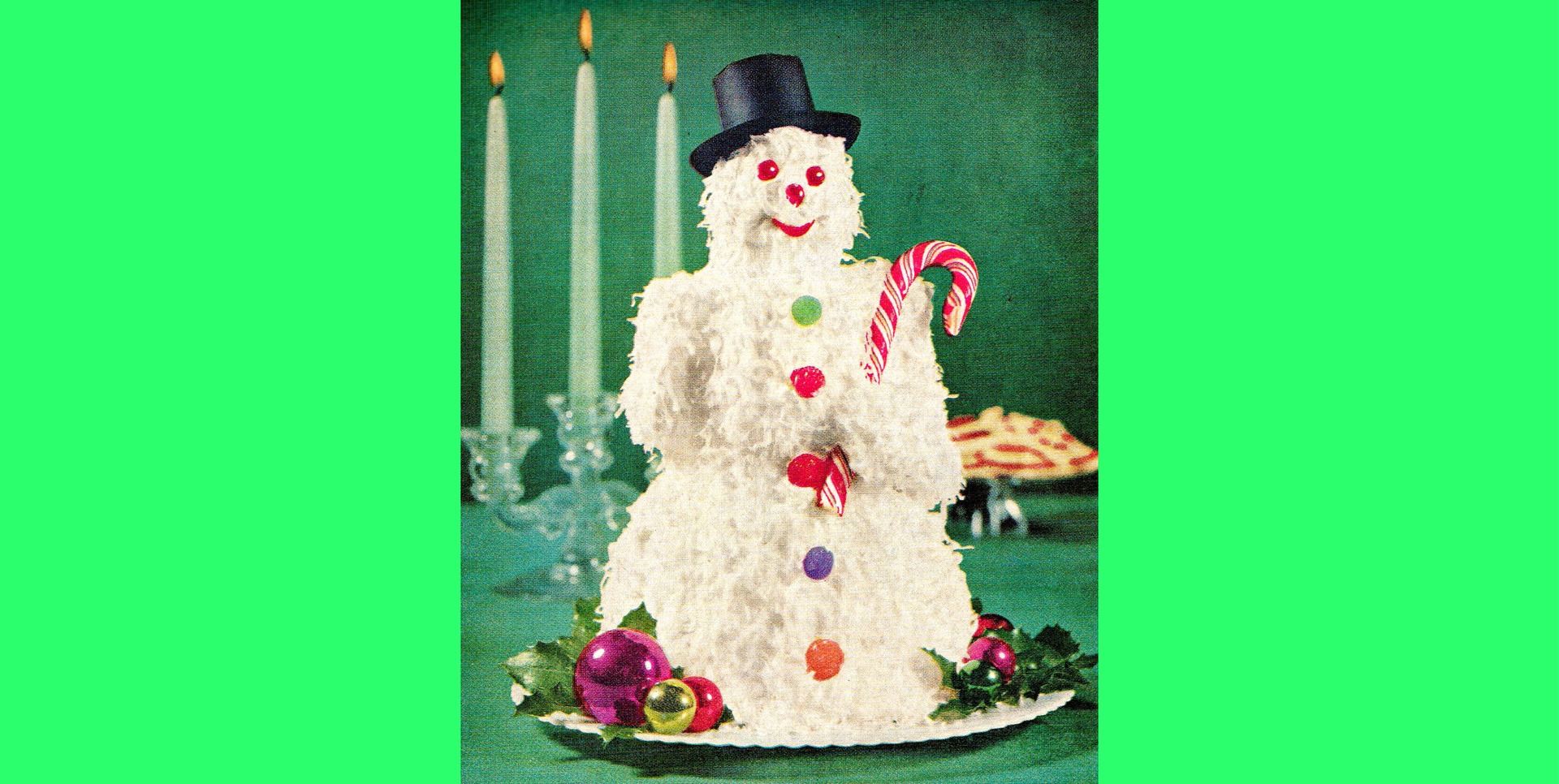
At the end of each year, it is a tradition for our team members to take the time and compile a very special list for you. From underrated movies (2024) or unusual gift ideas (2023) to their favorite songs (2022), each year the von Bartha team came up with some personal anecdotes and traditions. This time, we have collected recipes, eating and drinking habits that may inspire you, surprise you, or simply make you smile. Enjoy reading, best wishes, and happy holidays!
by
von Bartha Team
Idil’s Oyster Tradition
Every year on Christmas Eve, I somehow get talked into trying my grandfather Walter’s homemade recipe for fresh oysters, accompanied by his special vinegar and chili sauce. The oysters are bought fresh at the market on the day before Christmas Eve and carefully transported home on ice, a tradition my mother and grandfather have shared for many years. The oysters rest on the terrace, cooled and waiting, with lemons already pre-sliced, until the time finally comes. This ritual is a crucial moment for the entire family; many look forward to it throughout the year. On Christmas Eve, the famous sauce makes its appearance: a good splash of white wine vinegar, a hint of cognac, salt, pepper, and a fresh red chili, crushed gently with a fork before being drizzled carefully over the oysters. They are served, of course, with a fine bottle of champagne. And every single year, the same thing happens: I immediately forget what it tastes like the moment I wash it down, only to ask myself again: Why on earth do I keep making the same mistake?
So, for all the oyster lovers out there, I highly recommend spicing things up with a dash of vinegar and chili… and for everyone else: good luck, you’ll need it.
Reading Recommendation: Esst Austern!: Muschelzucht bindet klimaschädlichen Kohlenstoff – Tagesspiegel, 2025
Claudio’s Xherdan Shagrittibänz
In the Christian tradition, people commemorate Saint Nicholas of Myra on December 6 by filling boots with sweets and small gifts to remember his kindness. In Basel – or so I believe – the patron saint who delights the city each year with his talent and generosity is called Xherdan Shaqiri. That’s why, instead of Nicholas, I pay tribute to him on this day with my baking skills.
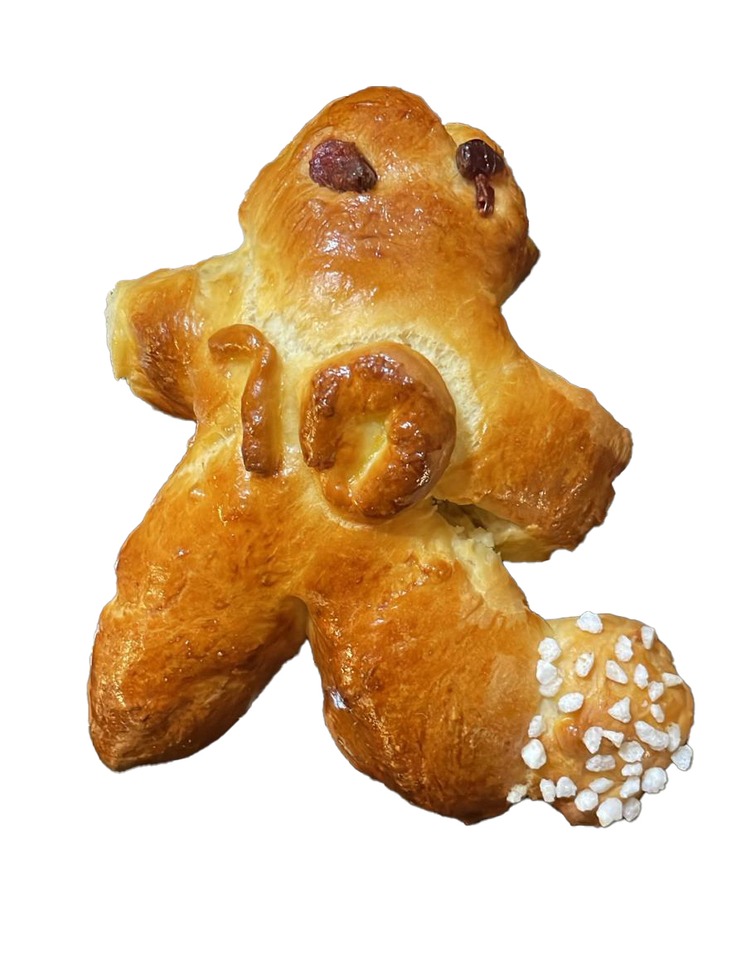
Xherdan Shagrittibänz. Masterpiece by Claudio Vogt
Daniela’s Medicine for Christmas Grumps
I’m a serious Christmas grump, and by December 24, I am usually so overstimulated by the whole Christmas circus that I just want to hide away somewhere. The person who is best able to save me from this state is my sister-in-law with her homemade eggnog. I fondly remember how she offered me a glass of this incredibly creamy drink that is just too good to be true, while we both decorated the tree together on the afternoon of Christmas Eve. I never discovered her secret recipe for this heavenly treat, but having another very good chat with her over a glass of it is one of the things I’m looking forward to this Christmas.
My health-promoting recipe for all Christmas grumps: Have a glass of great eggnog with a person you love.
Reading recommendation: Five golden rules for eggnog
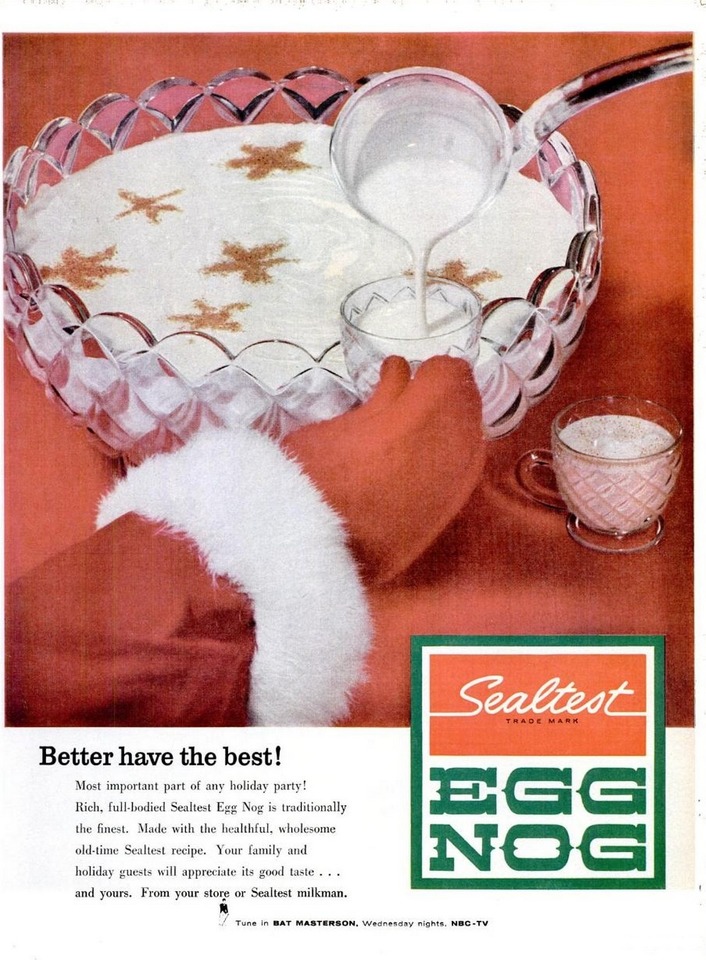
Eggnog commercial from 1958 from Idil's grandma's cooking book

Collage composition with an image from iStock
Mamie: This Christmas, choose Caerphilly!
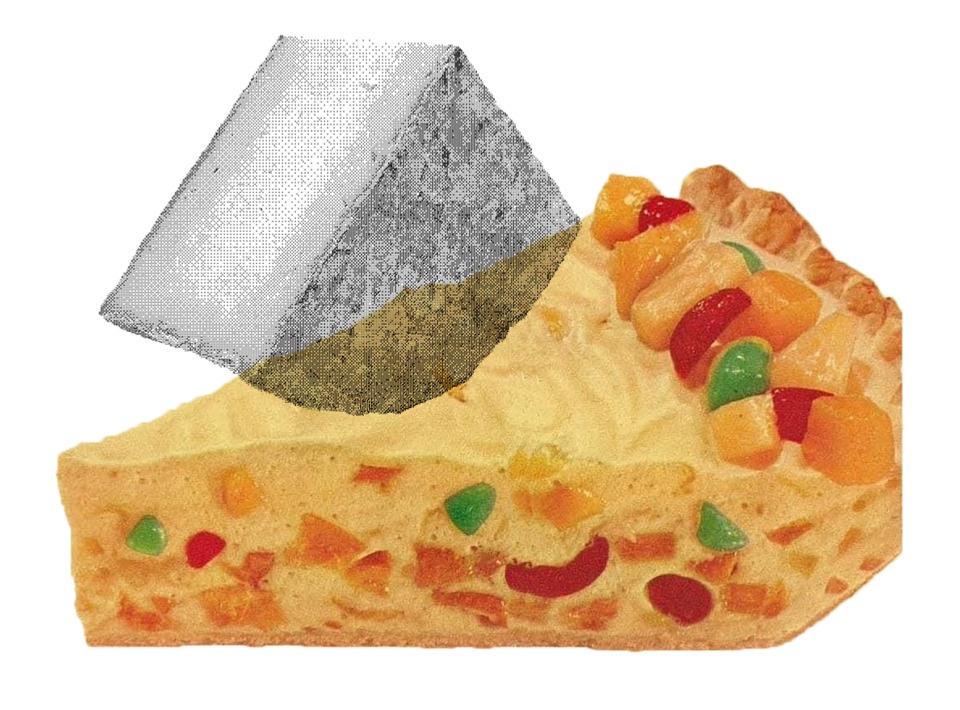
Christmas fruit cake served with cheese... a controversial pairing or a match made in heaven?
This unusual culinary treat is a tradition thought to originate in 19th century Yorkshire, where I studied at university. A thick slice of rich fruit cake paired with a slab of deliciously creamy Wensleydale cheese is a winning combination that Yorkshire dwellers associate with Christmas festivities. As we celebrate Christmas in Wales, I usually substitute the Yorkshire cheese for my all-time local favourite, Caerphilly, which has similar earthy notes and even won Best British Cheese at the World Cheese Awards in 2021.
Read more about the tradition:
Silvan’s Sauce Tradition
Growing up in a very Swiss family, Christmas dinner was without exception the famous Fondue Chinoise. (My sister, a devoted vegan, participates by gently lowering cubes of tofu into the broth.) With this dish, the true star is always the sauce, and in our household there is simply no competition in this case: it must be the sauces from GLOBUS Delicatessa. For this every year, my father is entrusted with this task, going to GLOBUS to procure the sauces for our Christmas feast. And every year he arrives in the mountains beaming with pride, carrying eight to ten boxes of sauce for a table of six. Inevitably, this leads to the traditional discussion about excess, as we end up using only half. And yet, without fail, the next year he buys the exact same quantity, again, very proudly of his hunt. Perhaps it’s the irresistible Christmas magic of the GLOBUS Delicatessa that inspires such enthusiasm. In any case, I am already looking forward to this year’s familiar debate about portion sizes and to the fond ritual it has become.
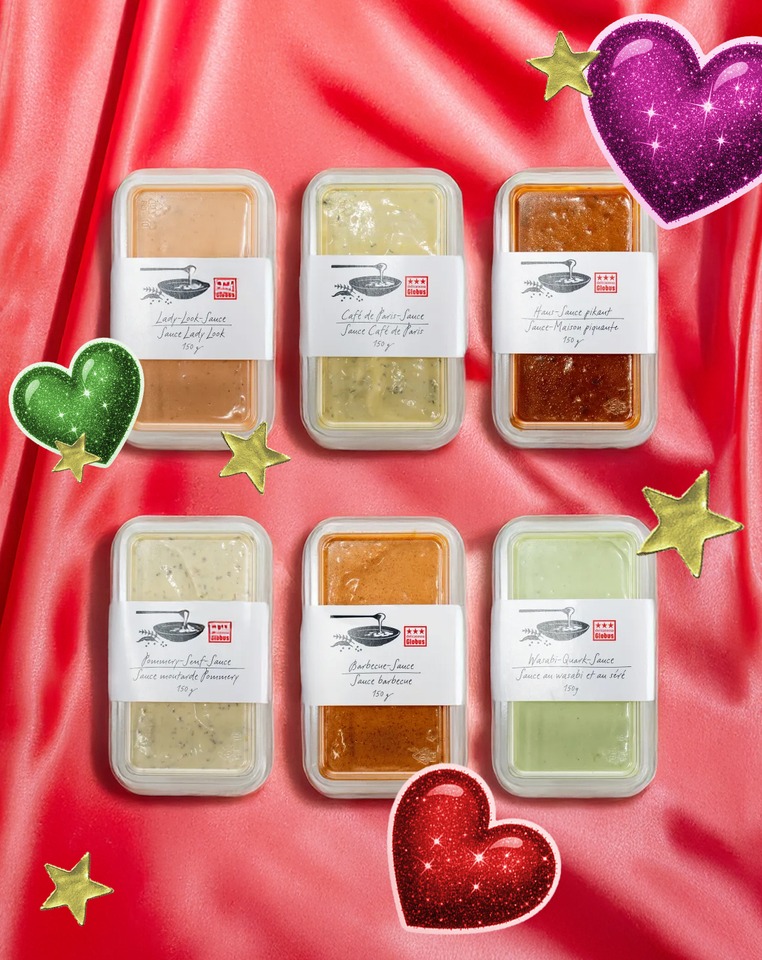
Collage of sauces from GLOBUS Delicatessa by Silvan Koller
Lea’s Chocolate Dream
The moment you become a grandparent, godparent, or any kind of honorary grown-up, you officially join the Christmas Elite. And with that title comes a sacred duty. Every year, you must gift your little one a Schokoladen-Märchenhaus by Frey!
Why? Because this magical, meltable masterpiece isn’t just chocolate. A gentle pull on the little tab and — voilà — instant holiday happiness. Every child deserves that kind of effortless enchantment. Keep the tradition alive, and you won’t just be the relative who brings chocolate. You’ll become a legend. The Chocolate House Hero.
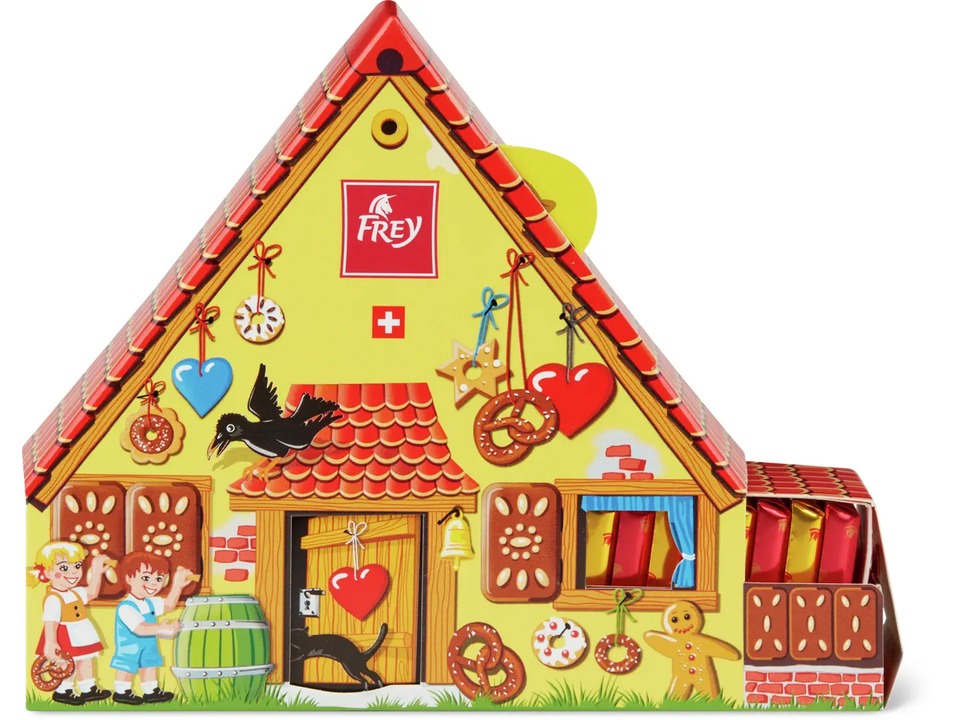
“Märchenhaus mit Napolitains Milchschokolade” by Frey Chocolate from Migros
Linda Palazzo’s Whisky Truffles
Since I love baking and have already tried quite a lot of cookie recipes, I wanted to try something new for the holiday season. These whisky truffles can be made very easily in your own kitchen. Here is the recipe:
INGREDIENTS:
-200 g dark chocolate (at least 72% cocoa)
-1.25 dl cream (half-and-half or heavy cream)
-50 g butter
-5 tbsp whisky
-Unsweetened cocoa powder
INSTRUCTIONS:
-Melt the chocolate together with the cream and butter over a bain-marie (water bath). To do this, heat a pan of hot water on the stove over medium heat. Place a stainless-steel bowl into the water and let the ingredients melt slowly.
-Once everything is well combined, add the whisky and, if desired, any other flavorings.
-Refrigerate the mixture for at least 2 hours. Once it is cold and firm, shape small “balls” (or whatever shape you like) by hand. Roll the truffles in cocoa powder and refrigerate again.
-After another 2 hours in the fridge, the truffles can be packed into small gift bags.
I think this is a wonderfully delicious gift idea or dessert tip for the festive season. And if you ever need to calm down at the office during a stressful day when all the tasks have to be done and you feel like you might go crazy—just grab a coffee and some of those truffles. Nobody’s gonna know… how would they know?
Margareta’s Golden Saffron Dream
For me, nothing feels more like Christmas than saffransbullar. While other traditions come and go, the golden scent of saffron buns immediately brings warmth, light, and calm into the darkest time of the year. In Sweden, these soft, yellow buns belong to Advent and especially to Lucia Day, when winter nights are long and candles glow softly in the morning darkness. Saffransbullar are more than just pastries. They taste of patience and care, of dough rising slowly while the kitchen fills with the unmistakable aroma of saffron. Their bright color feels like a promise that light will return. When I eat one—still slightly warm, tender and lightly sweet—it feels like Christmas has finally arrived.
Traditional Swedish Saffron Buns:
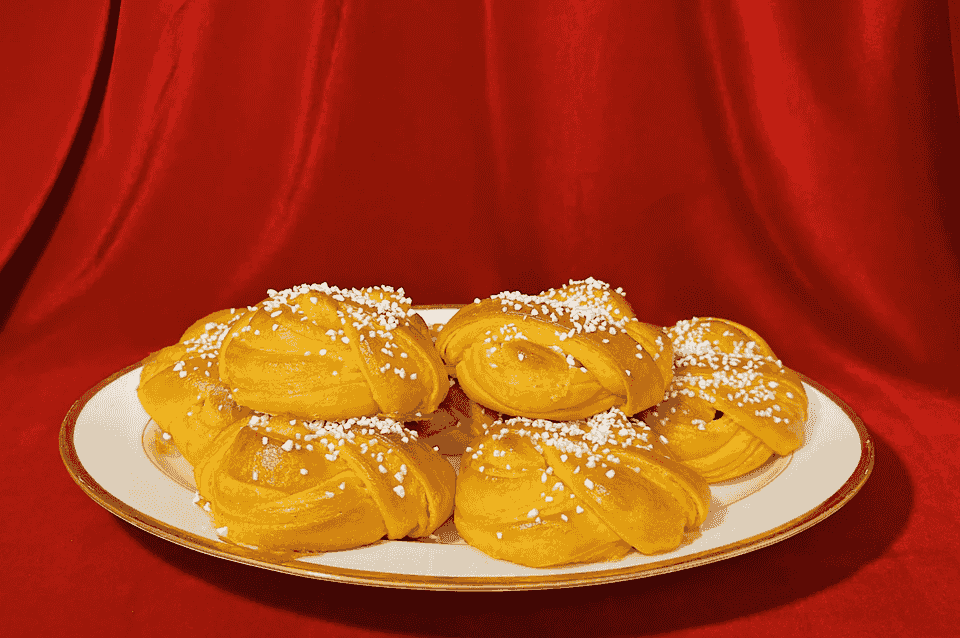
Saffransbullar. Photo: Elise Bauer
Miklos’ Winter of Walnuts and Chocolate
In Hungary, Christmas has always smelled of walnuts and poppy seeds. The traditional holiday pastry is the nut and poppy seed roll called bejgli, and it was as much a part of Christmas as snow on the windowsills. In my mother’s kitchen, this ritual returned every year, reliable and familiar, filling the house with warmth and sweetness. But the true highlight of our Christmas baking was something else entirely: the Ischler.
Originally a Viennese recipe from the imperial confectionery tradition, the Ischler could once be found throughout the lands of the Austro-Hungarian Empire. Our family baked a Transylvanian version of it. Between two layers of a special dough, a thin spread of raspberry jam was added. The cookies were cut into neat circles, baked until golden, and finally coated with a layer of dark chocolate. My mother’s Ischlers tasted magnificent, flavor-wise, they were absolutely first class. Their appearance, however, always left something to be desired. Chocolate dripped down the sides, pooled underneath, and rarely behaved the way it should. My mother never tried to perfect the technique. That task was eventually taken over by my sister Katy. She may well be the last lady in Central Europe who truly masters Hungarian cuisine with all its complicated recipes. Her Ischlers are flawless. They taste better and look more perfect than those in Hungarian or Viennese pastry shops. I have never had a particularly strong connection to Christmas and only look forward to it moderately. But I look forward, almost excessively, to Katy’s Ischlers.
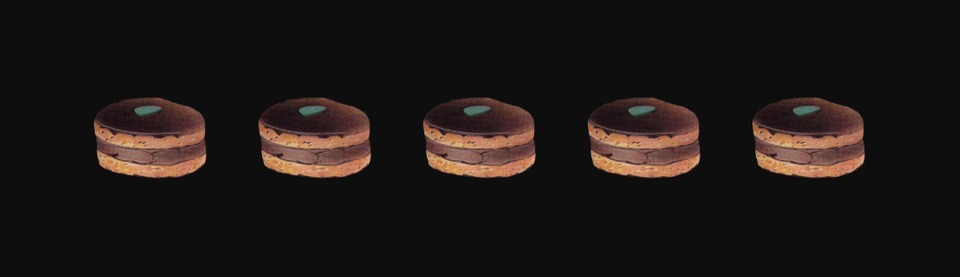
Ischler collage compiled by von Bartha team
Caroline’s Borrowed Recipe
Family traditions tend to survive for generations, so while we’re still trying to honour some customs of our parents, we’re also busy inventing a few of our own. For example, putting up the Christmas tree before the 24th of December and decorating it with the children—oh, the sacrilege! But one tradition I truly cherish, and hope to keep alive, is baking together as a family. As a young girl, I spent hours in the kitchen helping my father bake “Christstollen” or “Weihnachtsstollen” for family and friends. It wasn’t just baking—it was a full-scale production line. Christmas Stollen is a spiced sweet bread filled with candied fruit. Every family has its own version: some swear by candied peel, others prefer raisins, and a few brave souls use both. Personally, I adore a generous strip of almond paste running through the centre. My husband, however, would flee at the mere scent of anything resembling marzipan. Sadly, I no longer have my father’s original recipe. But as a fan of AI, all I have to do is type: “Give me the recipe for Christstollen with almond paste” and voilà: a surprisingly respectable recipe appears!
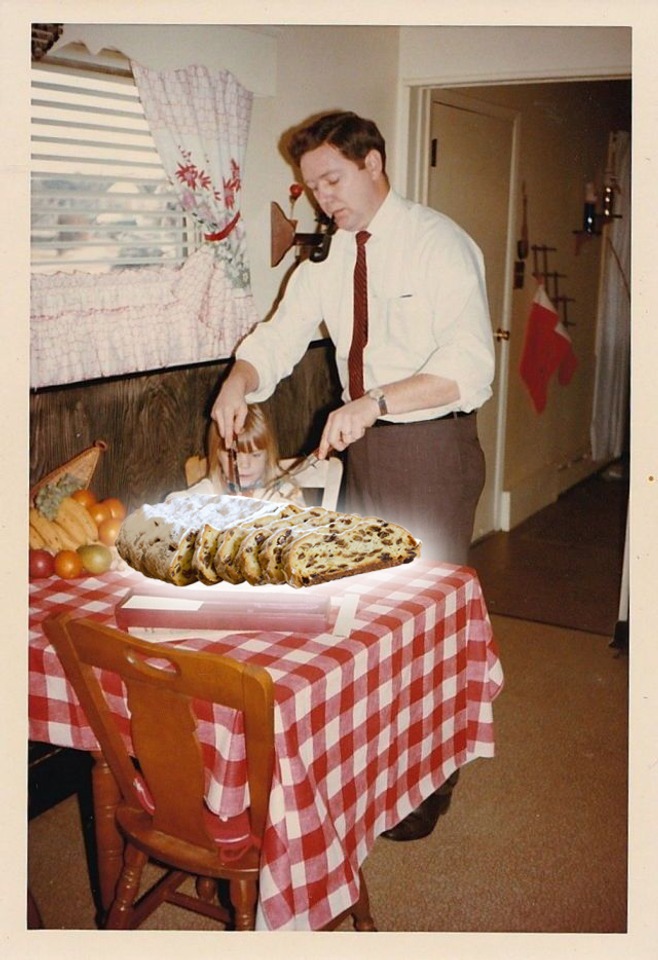
Christstollen collage with old analog photo from the archive compiled by von Bartha team
Julia’s Christmas challenge
In my family the undisputed number one in the ranking of fine and downright elegant Christmas baked goods are vanilla crescents. They have nothing in common with ordinary Christmas cookies, which are too dry and too sweet and lag far behind. For generations, knowing how to do crumbly melting crescents has been the deciding factor in whether you've got what it takes or not!
Here is my mother's delicious recipe for vanilla crescents:
-250 g wheat flour
-200 g butter
-70 g powdered sugar
-1 packet vanilla sugar
-100 g of a mix of ground walnuts, hazelnuts, and almonds
Note that the walnuts make all the difference, they add a slightly tart note! Knead everything together (first with a large fork, then with your hands; it's like shortcrust pastry), form a ball and leave to rest in the fridge overnight. The next day, cut the ball into quarters and start forming long rolls (thinner than your little finger) and cut them into approx. 6 cm pieces, which are then shaped into crescents. Place on a baking sheet and bake at 170 ° C for no more than 14 minutes, so that they are still very light in color. Sift a mixture of powdered sugar and vanilla sugar over them and hide them well from all the foodies around you until the special moment arrives!
Hester’s mom said it’s all about the butter!
X-mas dinner at Oma Schürholz’ place needed to serve a lot of people – 12 to 15 and her famous brown gravey could almost be eaten right off the spoon. The recipe was passed down from the Dutch Greatgrandmother to Oma to Hester’s mother and to Hester and here it is.
SHOPPINGLIST:
-fresh turkey of 6-8 kilos (order it well ahead of Xmas) serves up to 12 people and sometimes you have leftovers for sandwiches or casserole the next day.
-butter 3 x 250gr yes, you read correctly butaris (kind of clarified butter, doesn’t burn so easily)
-floury potatoes for best mashed potatoes are selfmade with milk and a “klontjeboter”, of course AND important: keep the cooking water for the finish off the gravey !!!
-brussels sprout as much as you think will be eaten
-cranberries (Naturaplan Bio Preiselbeeren eingekocht)
-Maizena dark saucebinder
-heavy cream 2dl
You can prepare the turkey a day ahead. Generously salt and pepper the turkey in and outside. Use 125 gr of butter to rub it on the turkey all around. Melt half a package of butaris and 1 ½ package of butter in a huge blackcast iron pan (which also has a lid). Then fry the turkey on the oven until it is nicely brown all around. Put the pan with lid on and the turkey inside in preheated oven of 200°. Every ¼ of an hour drizzle over with the buttery liquid from the pan. Cook until it has about 80° or you can easily wriggle the legs of the turkey. Could take up to 3 ½ hours with a turkey the size of 7 kilos. Let it cool down and store it in a not too hot place until next day. Next day: Mashed potatoes: Cook the potatoes with good amount of salt, then KEEP THE WATER when finished in a separate bowl. Mash the potatoes with a potato masher and add warm milk with a good “klontje boter” and some nutmegg. Mashed should be nicely silky kind of. Take the turkey out of the cast iron pan. The gravey: it needs the cooking water of the potatoes!!! Heat the butter of the turkey cooking in the cast iron pan, add the water of the cooked potatoes while stirring constantly. Don’t add too much water as the gravey needs to be lovely thick. If it is too watery, you can add the Maizena darf saucebinder while stirring. Then add heavy cream – as to your liking. Finish the gravey off with some pepper, salt is not needed, as it was in the potato water. Now you carve the turkey (slices from the breast, and the two legs cut smaller) and put it in a serving pan in the oven to heat with a little gravey on top, so that it doesn’t dry out. Further servings: brussels sprout with klontje boter and nutmegg, some cranberries from a jar (see above) and if wanted, some slices of canned peach (this was the Dutch touch of the recipe passed down by greatgrandmother Poelmann.
Bon appétit.
(Side note from Hester: I never cooked this recipe—my mom cooked it and wrote the story.)
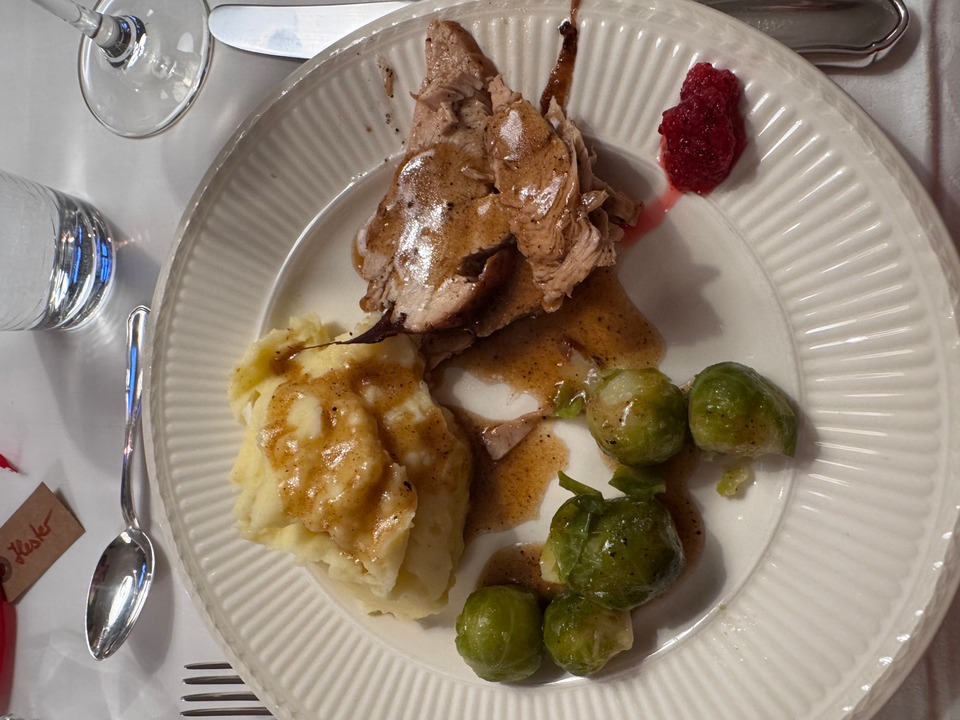
Hester’s X-mas dinner dish. Photo: Hester Koper
Wishing you happy holidays and lots of fun trying it out!

Vintage Archive by Abigail Weinman. Photo: Susy Welsh