When the Sky Moves – like smoke, mist – like a body unindued with voluntary power
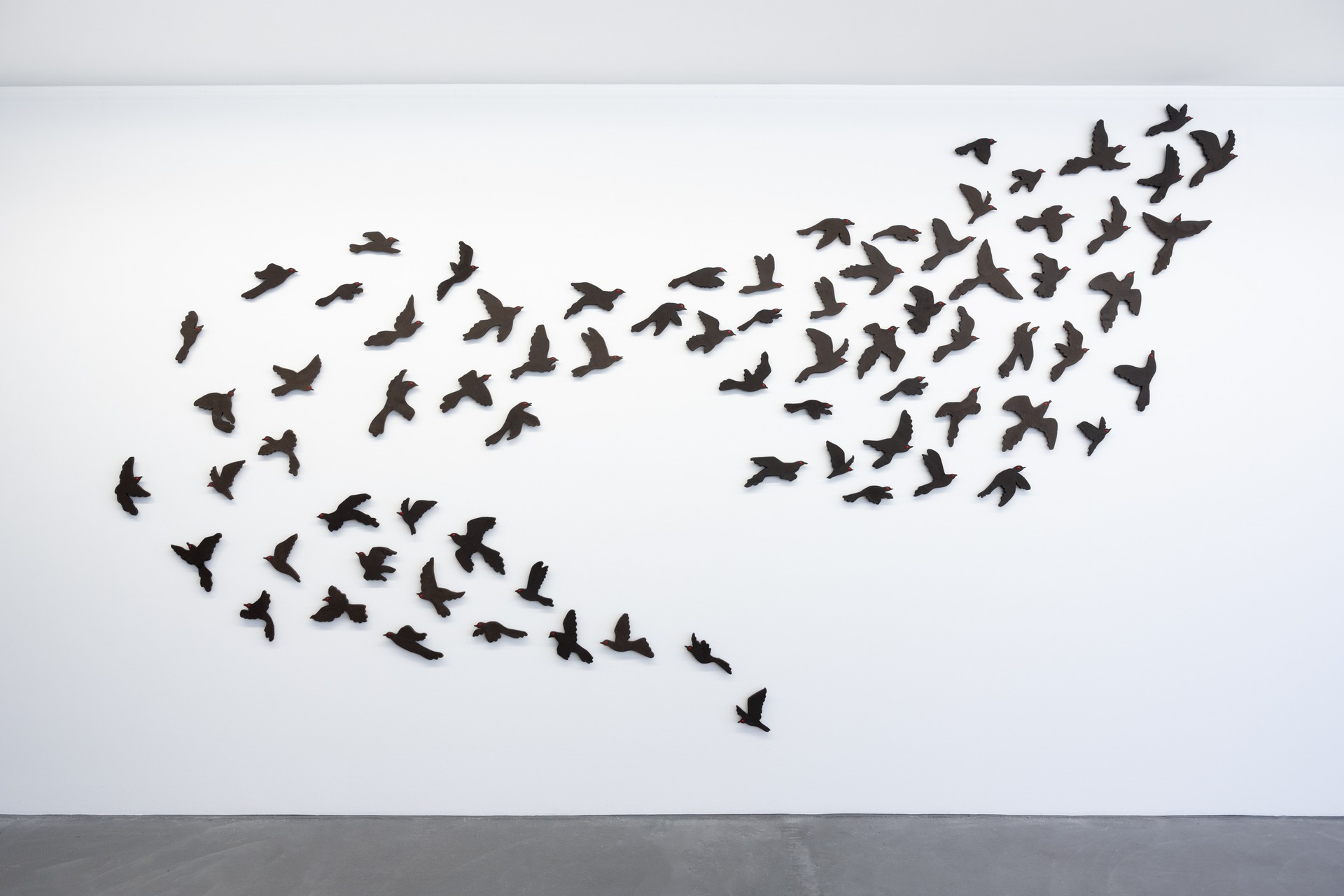
by
Mamie Beth Cary
There is something liquid-like about watching a flock of birds in flight, like a feathered river across the sky¹. Passenger pigeons dominated the North American skies until they became abruptly extinct on September 1, 1914.
Swedish-born, Copenhagen-based artist Emilia Bergmark celebrates the presence of these legendary birds, and the story of their merciless and untimely demise, with her work EX (Passenger Pigeon), 2025, presented as part of her solo exhibition, Going, Going, Gone., running until March 7, 2026 at von Bartha in Basel. The hand-made ceramic birds grace the gallery’s wall from floor to ceiling. Installed in a configuration reminiscent of the shape-shifting, almost supernatural, amorphous movement of the birds, Bergmark’s passenger pigeons look to confront the human race, seeking eye contact with their iconic carmine-red irises.
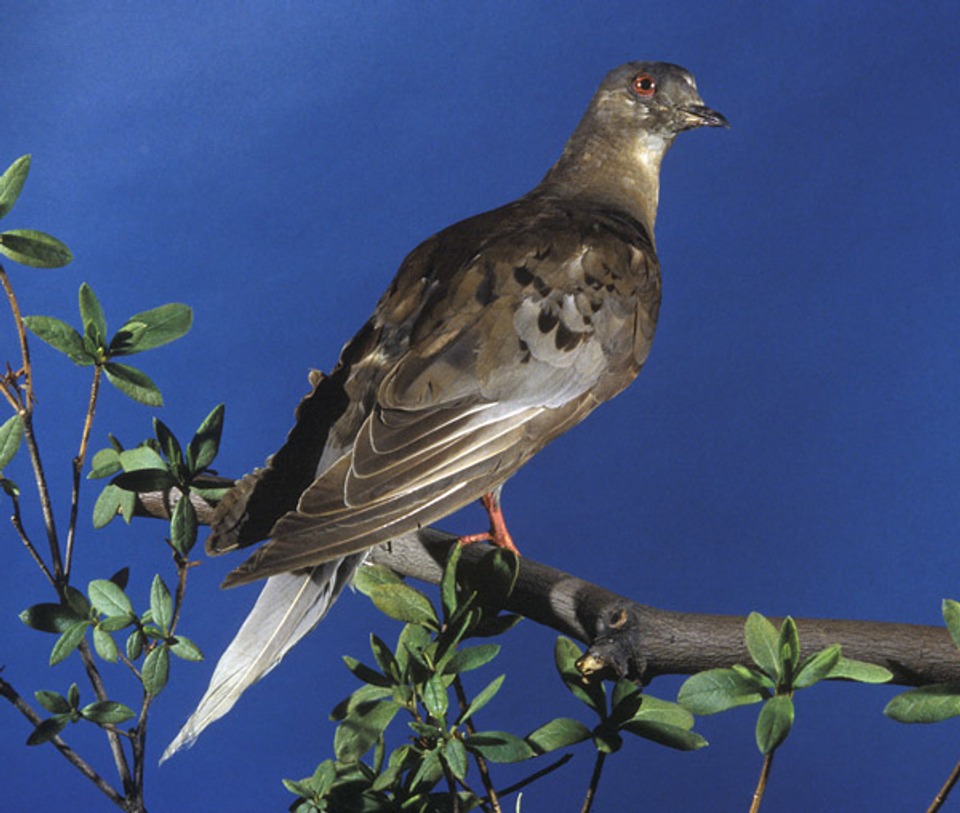
The last remaining passenger pigeon, a female named Martha, died in captivity at the Cincinnati Zoo (USA) on September 1, 1914. Photograph by Carl Hansen, Smithsonian Institution, 1985
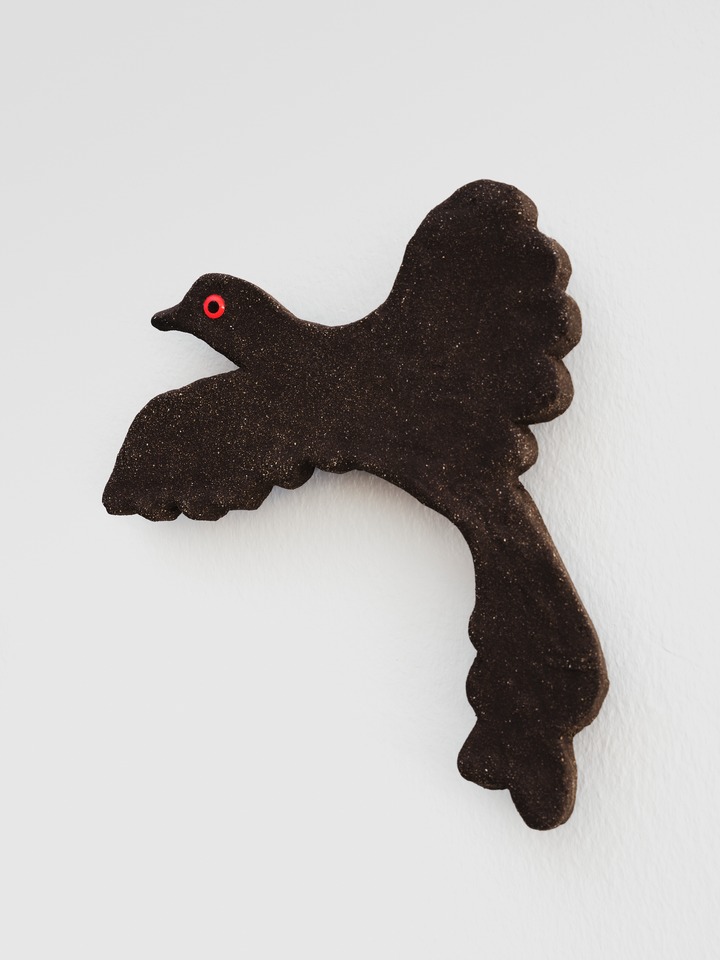
Detail of the wall installation "EX (Passenger Pigeon)," 2025. One of several handmade ceramic passenger pigeons. Photo by Lucie Schrag
Mistakenly considered everlasting, even omnipotent, due to their extraordinarily dense colonies, these birds travelled in murmurations² that would dwarf any localised movement of starlings today. Churning and twisting across the sky, they moved in wall-like columns performing “like smoke, mist – like a body unindued with voluntary power.”³
The power of a murmuration, you can hear it coming, you can feel it, before you can see it. The atmosphere is like an invisible force pushing the particles of air closer together, something unknown is forming. Deep in the distance an organic, moving shadow forms, it rises and falls as it grows and sweeps the horizon. You can feel its potential, and its uniform power.
Starling murmuration in the sky over Geldermalsen, a region in the Netherlands. Video by Marco Valk, Nature & Wildlife Films
Indeed, it is said that naturalist John Audubon compared the effect of the passenger pigeon’s migration, “The light of the noonday was obscured as by an eclipse. The pigeons passed in undiminished number, and continued to do so for three days.”⁴ In 1860 over a billion birds were counted, blocking out the sun, and yet due to human intervention, just 54 years later, they ceased to exist. No more “feathered-tempest” or a “biological storm”⁵ of birds, only stillness, only silence.
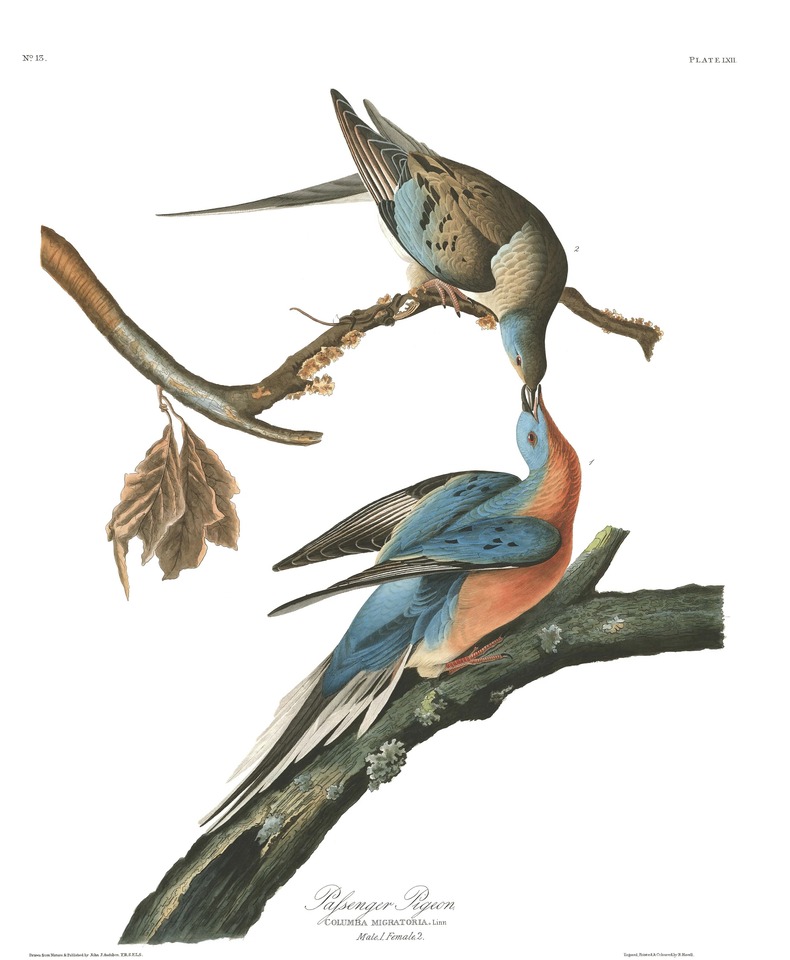
John Audubon’s "Passenger Pigeon," 1829–1830. Courtesy of the John James Audubon Center at Mill Grove, Audubon, Pennsylvania (USA), and Zebra Publishing
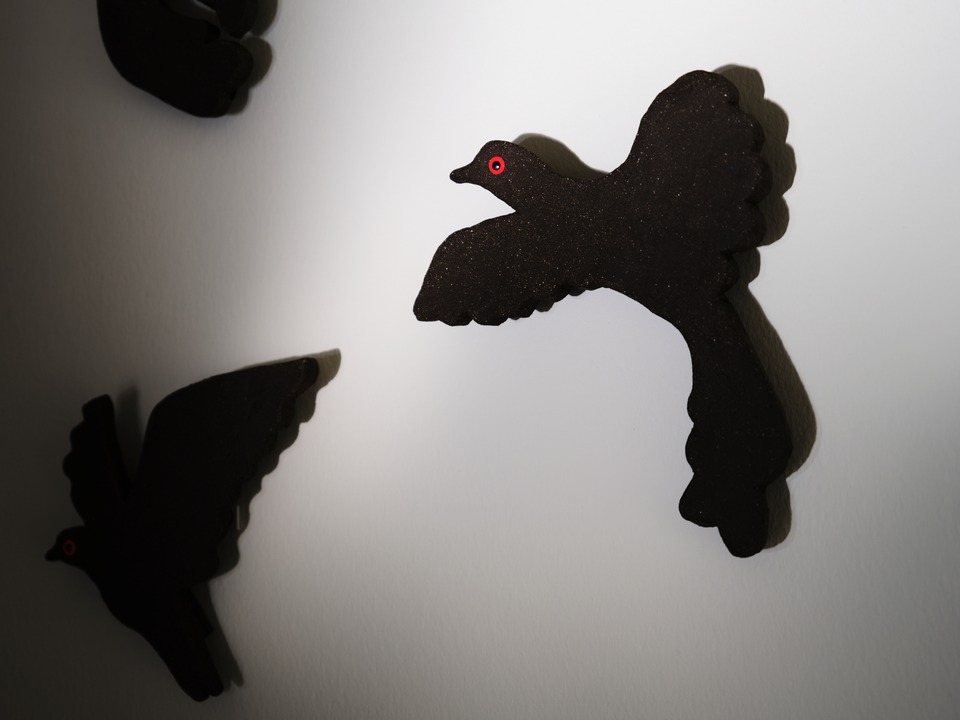
Detail of the wall installation "EX (Passenger Pigeon)," 2025. One of several handmade ceramic passenger pigeons. Photo by Lucie Schrag
1 Greenberg, Joel: A Feathered River Across the Sky: The Passenger Pigeon's Flight to Extinction, 2014, Bloomsbury USA
2 A large group of birds that all fly together and change direction together, or the act of birds doing this, is called: murmuration noun [uk /ˈmɜː.məˈreɪ.ʃən/ us /ˈmɝː.mɚˈeɪ.ʃən/] Cambridge Dictionary, 2025, Cambridge University Press
3 Coleridge, Samuel Taylor: The Notebooks of Samuel Taylor Coleridge. Edited by Kathleen Coburn. London: Pantheon Books, 1957–2002.
4 Audubon, John James: Ornithological Biography. Edinburgh: Adam Black, 1831–1839.
5 Leopold, Aldo: On a Monument to the Pigeon in A Sand County Almanac. New York: Oxford University Press, 1949
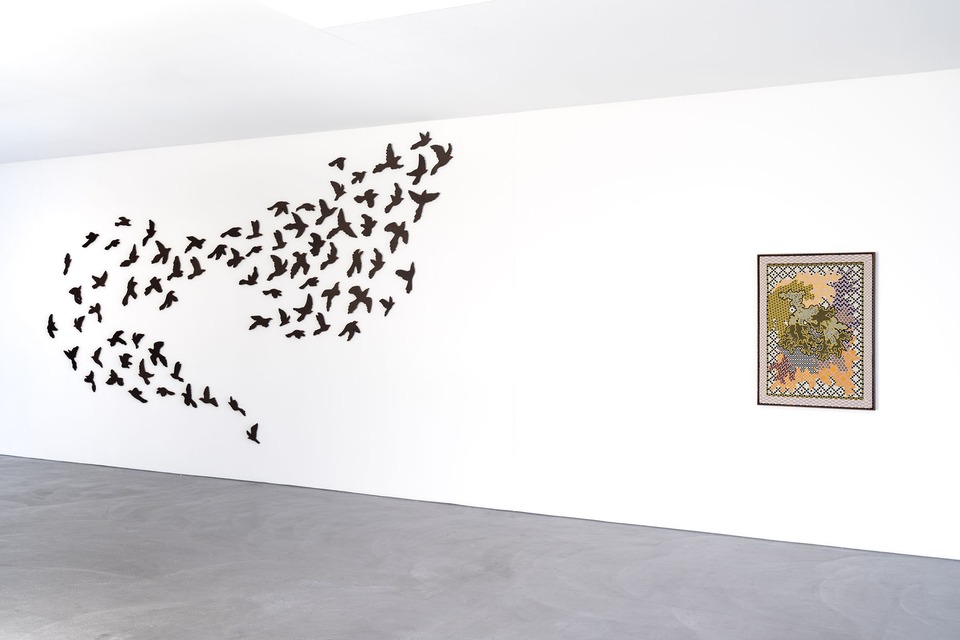
Emilia Bergmark, exhibition view, "Going, Going, Gone.", view on "EX (Passenger Pigeon)" and "NT (Lunglav)," both 2025, von Bartha, Basel, 2026. Photo by Finn Curry
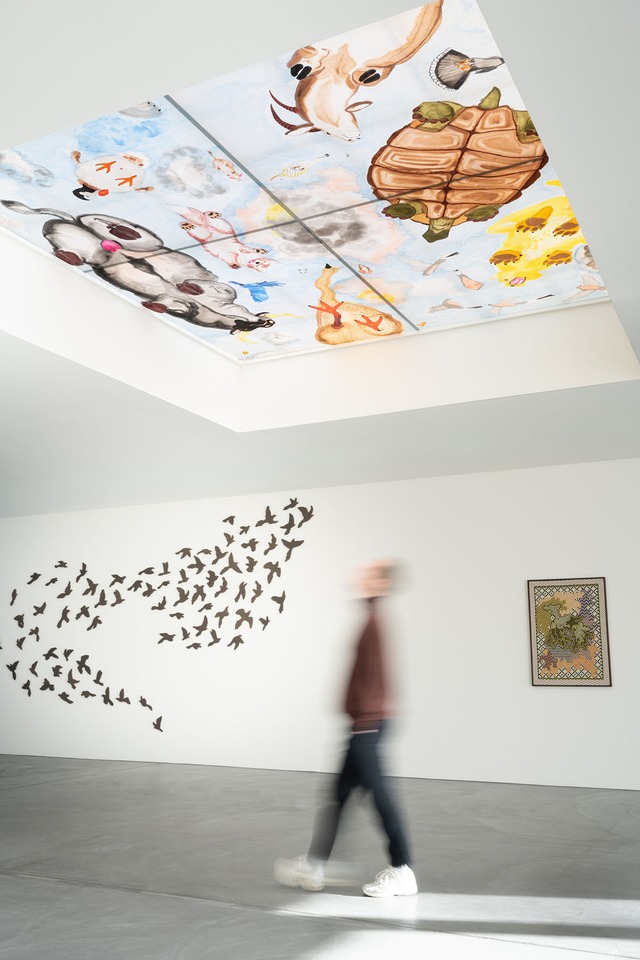
Emilia Bergmark, exhibition view, "Going, Going, Gone.", von Bartha, Basel, 2026. Photo by Finn Curry
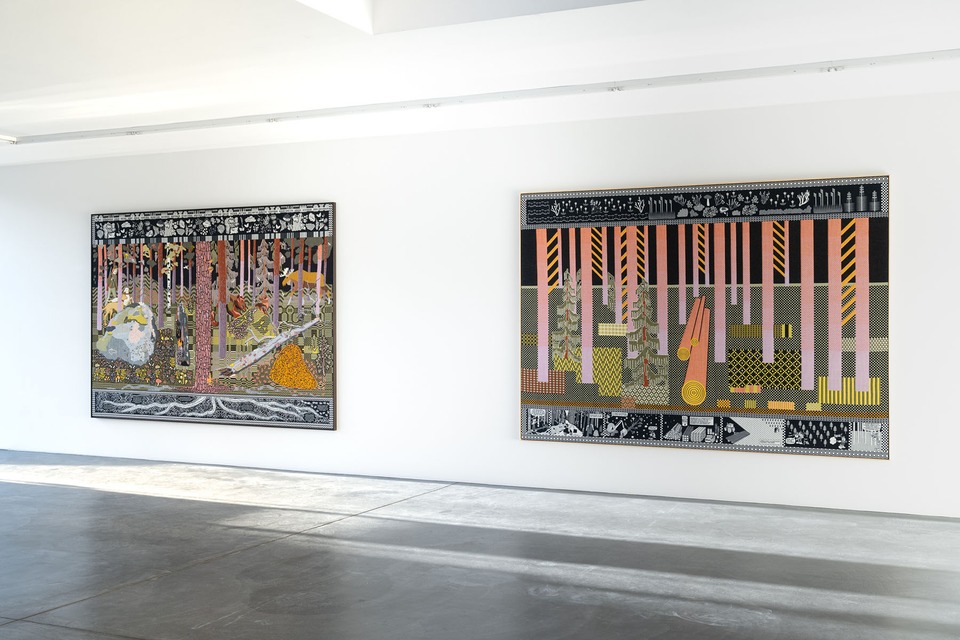
Emilia Bergmark, view on "Boreal Natural Forest" and "Boreal Tree Plantation," both 2025, von Bartha, Basel, 2026. Photo by Finn Curry
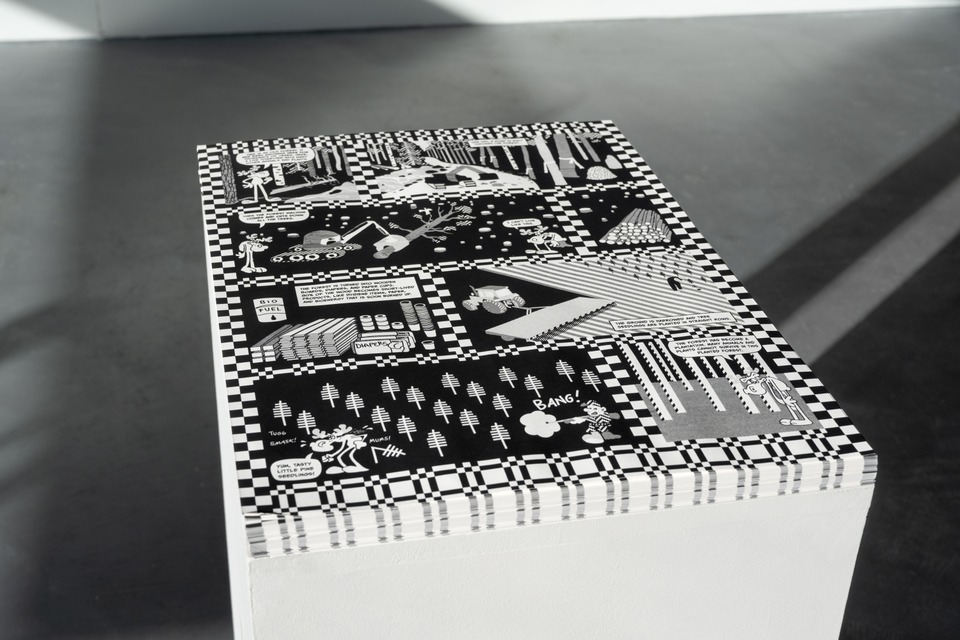
Emilia Bergmark, view on "Going, Going, Gone.", 2025, von Bartha, Basel, 2026. Photo by Finn Curry
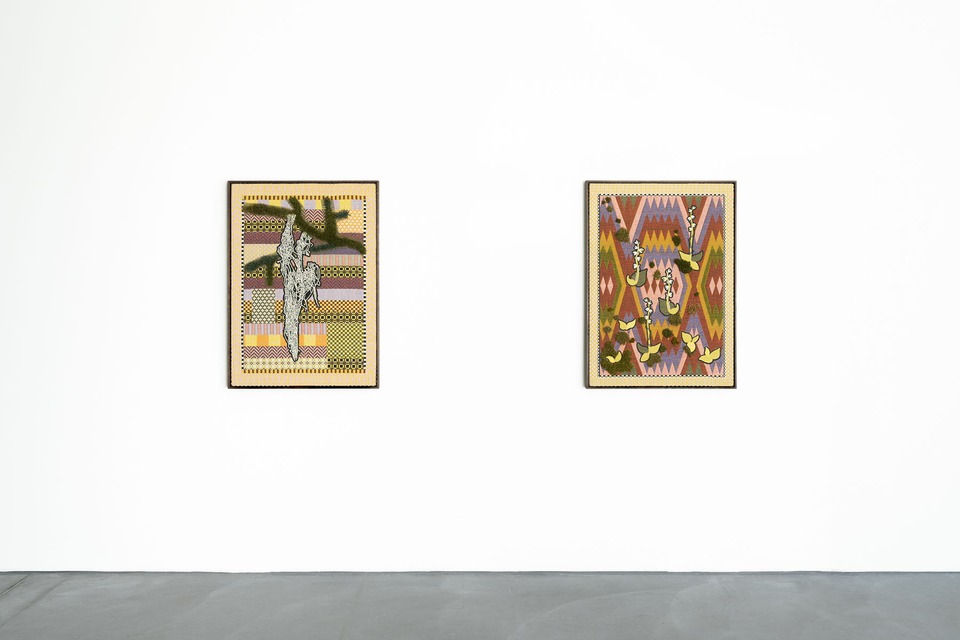
Emilia Bergmark, view on "NT (Garnlav)" and "VU (Knärot)," both 2025, von Bartha, Basel, 2026. Photo by Finn Curry